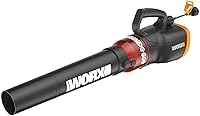
Is a 150 MPH Leaf Blower Good?
Yes, a 150 MPH leaf blower is good for most yard cleanup, especially wet leaves, gravel, and debris stuck to hard surfaces. Speed alone doesn't tell the whole story, though, because air volume in CFM decides how much it clears per pass.
On this page (7 sections)
- What does 150 MPH actually mean on a leaf blower?
- Is 150 MPH good for wet leaves and heavy debris?
- What air volume should come with a 150 MPH rating?
- When is a 150 MPH blower the right choice?
- How does speed affect noise and weight?
- Does corded or battery power change the answer?
- Is a 150 MPH leaf blower worth it for a typical yard?
Yes, a 150 MPH leaf blower is good for most yard cleanup. It has enough air speed to lift wet leaves, pine needles, and debris stuck to gravel or pavement, so the short answer is a clear yes for typical home jobs.
The rest of this guide explains where that speed helps and where air volume decides the result.
MPH gets the attention because it's the number printed in big type on the box. CFM does more of the daily work.
Understanding both keeps you from buying more speed than you need or too little volume for a wide driveway.
What does 150 MPH actually mean on a leaf blower?
MPH is how fast the air leaves the nozzle, not how much air moves. A 150 MPH rating means the stream travels at 150 miles per hour, which is fast enough to dislodge leaves clinging to a surface.
Think of it like a garden hose. A narrow nozzle with high pressure blasts one spot hard, while a wide nozzle covers more ground at lower pressure.
Leaf blowers work the same way, and the speed figure describes the force of that narrow stream.
Manufacturers measure MPH at the nozzle opening under controlled conditions. Real-world speed drops once the air spreads past the tube, which is why a 150 MPH blower feels weaker a few feet from the tip than up close.
The number still tells you roughly how much push the blower delivers against resistance, such as damp leaves matted on concrete. For the volume side, see our guide to what is a good CFM for a leaf blower.
Is 150 MPH good for wet leaves and heavy debris?
Yes, speed is exactly what wet leaves need. Damp leaves stick to pavement and clump together, and a fast stream breaks those clumps apart better than a slow, wide breeze.
Dry leaves are light and blow away with modest speed. Wet leaves are heavier and grip the surface, so extra velocity helps on a rainy fall day.
The same applies to pine needles and grass clippings stuck after mowing.
Debris on gravel and mulch is another case where speed helps. A fast stream lifts material off the stones without pushing the gravel around as much as a wide, low-speed blast would.
The limit is volume. If the stream is fast but narrow, you clear a small path and need many passes across a large driveway.
Speed gets leaves moving; CFM decides how wide the swept path is.
What air volume should come with a 150 MPH rating?
Look for at least 400 to 450 CFM alongside a 140 to 150 MPH rating. That pairing moves a wide enough stream to clear a driveway in fewer passes than a narrow high-speed jet.
CFM measures cubic feet per minute, or how much air the blower pushes. A 450 CFM model with 140 MPH speed is a balanced tool for home use.
A 600 CFM model at 110 MPH clears open lawns faster but pushes less hard against stuck debris.
The table below shows how the three blowers in this guide compare on the two numbers that matter most.
| Blower | Air speed | Air volume | Weight |
|---|---|---|---|
| WORX WG520 | 110 MPH | 600 CFM | 6.4 lb |
| Black+Decker 450 CFM Corded | 140 MPH | 450 CFM | 7 lb |
| Craftsman CMEBL710 Corded | 140 MPH | 450 CFM | 6.7 lb |
None of these three hits 150 MPH, which is normal for corded home blowers. Gas backpack models and some high-end battery units reach that figure.
For most yards, the 140 MPH pairing above is close enough that you won't notice the difference.
When is a 150 MPH blower the right choice?
A 150 MPH blower suits hard surfaces and debris that clings. It's the better pick when your cleanup happens on concrete, asphalt, or gravel rather than open lawn.
Choose high speed if your yard has a lot of paved area. Driveways, walkways, patios, and decks hold leaves against the surface, and the fast stream lifts them cleanly.
Gravel beds are similar, since leaves settle between the stones.
It also helps in fall and winter, when rain leaves everything damp. A slower blower pushes wet leaves into piles but struggles to lift them off the ground.
Speed breaks the surface tension and gets them moving.
Skip the speed focus if your main job is gathering leaves across a large lawn. There, a wide high-CFM stream covers more ground per pass.
The right balance depends on the mix of surfaces you clean.
Which blower fits wet-leaf cleanup?
The Black+Decker 450 CFM Corded reaches 140 MPH, the highest speed of the three picks here, and pairs it with 450 CFM. That makes it the natural fit for damp leaves on pavement.
Its built-in scraper helps loosen leaves that won't lift with air alone. Two speed settings let you drop to low near flower beds and open up on the driveway.
A cord retention clip keeps the plug from pulling loose as you move.
The trade-off is reach. As a corded tool, it needs an outlet and an extension cord.
Weight is 7 lb, light enough to carry through a full cleanup.
How does speed affect noise and weight?
Higher speed usually means more noise and sometimes more weight. A faster air stream takes more motor power, and that power shows up as sound and as heft in your hands.
The Black+Decker model is rated at 75 dB and the Craftsman at 71 dB. Those figures sit in the normal range for corded handheld blowers.
Higher-speed gas units often run louder, which is why many towns limit when you can use them.
Weight matters over a long session. The WORX WG520 is 6.4 lb and the Craftsman is 6.7 lb, both easy to carry one-handed for a while.
A heavier blower tires your arm faster, especially at full speed.
Noise also travels. If you clean early, a quieter model keeps the peace.
Our guide to how loud is a leaf blower explains the decibel ranges. For carrying comfort, see how much does a leaf blower weigh.
Does corded or battery power change the answer?
Corded blowers reach 140 to 150 MPH without battery weight, while battery models in that speed range trade run time for freedom from the cord. Your yard layout decides which suits you better.
Corded electric is the simpler path to high speed. The motor draws continuous power from the outlet, so there's no fade as a battery drains and no charging wait between sessions.
The WORX WG520 runs on a 12 Amp corded motor and the Craftsman on a 9 Amp motor, both steady for long jobs.
The catch is the cord. You'll manage an extension cord across the yard and stay within its reach.
For a front yard close to an outlet, that's a minor annoyance. For a large property without easy power, a battery blower earns its place despite the extra weight.
If you're weighing battery platforms, our guide to what voltage leaf blower is best covers how voltage affects power and run time. A 150 MPH battery blower performs like a corded one while the charge holds.
Which blower covers the widest area?
The WORX WG520 leads on air volume with 600 CFM at 110 MPH, so it clears broad open areas in fewer passes. It's the pick when lawn coverage matters more than lifting power.
Turbine fan technology spreads the air into a wide stream, which suits lawns, driveways, and patios. Variable speed control lets you back off near landscaping and open up for big leaf piles.
At 6.4 lb it stays comfortable through a full afternoon.
The lower speed means less lift on wet, stuck leaves than the 140 MPH models. If your yard is mostly lawn and dry leaves, the extra volume pays off.
Which blower is best for storage and light work?
The Craftsman CMEBL710 matches the 140 MPH speed and 450 CFM volume in a 6.7 lb body. It's a good fit for smaller yards and for readers who want the tool to hang out of the way between uses.
An integrated hook hangs the blower on a wall rail system sold separately, keeping the garage floor clear. The 2 speed switch covers light cleanup around flower beds and tougher work on hard surfaces.
A nozzle scraper loosens stubborn debris before the air stream takes over.
It runs on a 9 Amp motor and reaches the same speed as the Black+Decker, so wet-leaf performance is close. Choose it for the storage hook and scraper; choose the Black+Decker for cord retention.
Is a 150 MPH leaf blower worth it for a typical yard?
For most homes, yes, as long as the blower also has solid CFM. A 150 MPH leaf blower handles wet leaves and hard surfaces well, and a matching 400 to 450 CFM keeps the swept path wide.
If your cleanup is mostly dry leaves on a large lawn, high volume at a lower speed clears faster. If you fight damp leaves on pavement and gravel every fall, speed earns its keep.
Buy the balance that matches your surfaces, not the biggest number on the box.
The WORX WG520 is the volume pick for broad lawns. The Black+Decker 450 CFM Corded is the speed pick for wet, stuck debris, and the Craftsman CMEBL710 covers light work with tidy storage.
Measure your longest cord run and count your paved surfaces before you choose. Then read what is a good CFM for a leaf blower to lock in the volume side.
Frequently asked questions
Is 150 mph enough to blow wet leaves?
Yes. Wet leaves are the main reason to want speed in the 130 to 150 MPH range.
A 150 MPH blower pushes damp leaves that stall under a slower stream, though a wide nozzle and decent CFM still do most of the lifting.
What matters more, MPH or CFM?
CFM matters more for moving volume, and MPH matters more for lifting stuck debris. A blower with high MPH and low CFM clears a narrow strip fast but needs more passes.
Look at both numbers together rather than chasing top speed.
Can a 150 MPH leaf blower damage my lawn?
It can strip mulch, loosen topsoil, and bruise young plants if you hold full power close to the ground. Use the low speed setting near beds and gravel, and keep the nozzle a few inches off the surface so air spreads instead of digging in.
Are corded or battery blowers better for 150 MPH performance?
Corded electric blowers reach 140 to 150 MPH without the weight of a battery, so they suit big yards near an outlet. Battery models in the same speed range trade some run time for freedom from the cord.
Pick based on distance from the house, not speed.