Leaf Blower vs Rake: Which Clears Leaves Better? (October 2026)
A leaf blower clears broad areas faster, while a rake gives you more control around beds and fragile plants. Choose by yard size, leaf cover and where the leaves have collected.
On this page (6 sections)
A leaf blower clears broad areas faster, while a rake gives you more control around beds and fragile plants. In the leaf blower vs rake choice, yard size, leaf cover and the places leaves collect matter more than choosing one tool for every task.
A blower moves leaves across lawns, driveways and paths without repeated pulling. A rake works well for small piles, tight corners and spots where you want to avoid moving mulch or gravel.
You may not need to pick only one. Use a blower to gather leaves across an open lawn, then rake the edges and garden beds where airflow could scatter material.


Leaf blower vs rake: which clears leaves faster?
A leaf blower is generally faster across a large, open area. It can push leaves toward a collection spot without the repeated strokes needed to rake the whole lawn.
Speed depends on how deep and wet the leaf cover is, along with the yard's shape. A few dry leaves on a path are quick with either tool; a thick layer spread across a large lawn takes more time to gather and collect.
A blower also requires a plan for where leaves will go. Pick a collection area first, then move leaves in smaller passes so wind or airflow doesn't spread them back across the yard.
For a step-by-step approach, see our guide to blowing leaves efficiently. It covers choosing a direction and building a pile without repeatedly moving leaves from one side of the lawn to the other.
Does a leaf blower work better on a large lawn?
A blower is often the practical choice for a large, open lawn because you can move leaves without dragging a rake across the full area. The EGO LB5302 has a variable speed dial from 250 to 400 CFM and a turbo mode with up to 530 CFM, according to EGO's product information.
Choose a lower airflow setting near lawn edges or when leaves are already close to the pile. For a smaller tool focused on patios and driveways, the Black+Decker 20V LSW221 is listed at 100 CFM and weighs 3.7 lb.
When does a rake give you better control?
A rake is easier to control around garden beds, trees, narrow borders and loose mulch. You can move leaves from one small area without sending them across the yard.
Raking also avoids powered airflow near lightweight objects, gravel or delicate plants. Work in short strokes and gather leaves into small piles that are easy to lift or bag.
For mulch beds, a blower can scatter the mulch along with the leaves if the airflow is too strong or aimed too close. A rake gives you more direct contact, while a blower may still work at a low setting when leaves sit on top of heavier mulch.
Our guide to blowing leaves off mulch without scattering it explains how to adjust your approach. On a lawn, see how to use a leaf blower for guidance on moving leaves without pushing them into unwanted spots.
Is raking better for wet leaves?
Neither tool makes a thick mat of wet leaves effortless to clear. Wet leaves can cling to grass and pavement, so break large patches into smaller sections and use a rake to loosen material that resists moving.
A blower with more airflow may help move damp leaves, but choose a setting that gives you control. EGO describes the LB5302's turbo mode for wet leaves and other debris; that is a maker statement, not a guarantee that it will move every wet pile.
Which tool is easier on your body?
A blower avoids repeated raking strokes, while a rake is lighter to carry and doesn't have a motor or battery. The easier choice depends on the movement you find comfortable and the size of the job.
A handheld blower still requires you to carry and direct the tool. Take breaks during long sessions, switch hands if comfortable, and avoid twisting your back to aim the nozzle.
Raking involves repeated pulling, bending and lifting. Keep piles small, use a rake suited to your reach, and move your feet instead of stretching across a wide area.
Weight can help you compare handheld options, but it doesn't describe the full effort of a cleanup. The Black+Decker LSW221 weighs 3.7 lb, while the EGO LB5302 weighs 7 lb.
Is a blower quieter than raking?
Raking makes no motor noise, while blowers produce sound that varies by model and use. Check the manufacturer's noise figure for the exact blower and follow local rules for when yard equipment can run.
The EGO product information gives a 65 dB noise level, and the Black+Decker product information gives 61 dB. Those figures don't account for how loud a tool will seem at your property or how sound travels to nearby homes.
How do you collect leaves after moving them?
A rake makes leaves ready to lift by hand, while a vacuum mulcher can collect them into a bag as part of the cleanup. Choose based on whether you want to gather piles, bag leaves or reduce their volume.
If you blow leaves into a pile, you still need a way to collect and dispose of them. Keep the pile small enough to bag, compost or move to your yard-waste collection area.
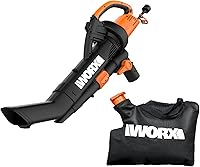
The WORX Trivac WG509 combines blowing, vacuuming and mulching. Its maker lists a 42L collection bag and an 18:1 mulch ratio, which can reduce the volume of leaves before disposal or composting.
If collecting and shredding leaves is a regular part of your fall cleanup, compare options in our guide to the best leaf vacuum mulchers. For piles you plan to move yourself, a rake and a leaf bag may be all you need.
Should you choose a leaf blower or a rake?
Choose a blower for broad lawns and paths, and a rake for detail work around beds, borders and delicate materials. Use both when your yard has open areas and tight spots.
Pick the Black+Decker LSW221 for light cleanup on small hard surfaces. Consider the EGO LB5302 when you need adjustable airflow for a larger area, or the WORX Trivac WG509 if vacuuming and mulching are part of your plan.
Choose a rake when quiet, precise cleanup matters more than clearing a wide area quickly. For most yards, the useful rule is simple: blow leaves toward a safe collection point, then rake the places where airflow would scatter or disturb other material.
Leaf blower vs rake: which should you use?
Use a leaf blower to clear open areas faster, and a rake to control leaves near plants and loose material. If you need to collect and mulch leaves, compare a blower-vacuum such as the WORX Trivac with your other cleanup options.
For a blower-first routine, read how to blow leaves efficiently next. Measure the size and layout of your yard before choosing a tool, and match the cleanup method to the surfaces and plants you need to protect.
Frequently asked questions
Is a leaf blower better than a rake?
A leaf blower is usually faster for moving leaves across a lawn, driveway or walkway, while a rake gives you more control near plants and edges. Choose based on the area and where leaves collect.
Many yards are easier to maintain with both tools.
Can a leaf blower damage plants or mulch?
Strong airflow can scatter loose mulch or disturb delicate plants, so use a lower setting and aim away from them. A rake gives you closer control around stems and garden beds.
For detailed steps, see our guide to blowing leaves off mulch without scattering it.
What is easier to use, a leaf blower or a rake?
A blower can reduce repeated raking across a large area, but it still takes control to direct leaves into a pile. A rake needs physical pulling and lifting, but it is quiet and doesn't need power.
Yard size, leaf depth and your comfort with each motion matter.
Can I use a leaf blower to gather leaves for disposal?
Yes. Blow leaves into a manageable pile, then collect them by hand or use a vacuum mulcher.
Keep the pile away from drains and avoid blowing leaves into the street.
Our guide to using a vacuum leaf blower explains how collection and mulching work.