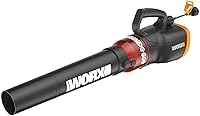
What Leaf Blower Has the Highest CFM?
The EGO LB8803-2 has the highest CFM of the cordless blowers we compared, at 880 CFM in turbo mode. Among the three picks here, airflow runs 880 CFM, 770 CFM, and 765 CFM, so the EGO leads by a clear margin.
On this page (8 sections)
- What does CFM mean on a leaf blower?
- Which cordless leaf blower has the highest CFM?
- How do the top three blowers compare on airflow?
- Is the highest CFM always the best choice?
- Who should pick the highest-CFM blower?
- How much CFM do you actually need?
- What else affects real-world clearing power?
- So what leaf blower has the highest CFM?
The EGO LB8803-2 has the highest CFM of the cordless blowers we compared, at 880 CFM in turbo mode. Among the three picks here, airflow runs 880 CFM, 770 CFM, and 765 CFM, so the EGO leads by a clear margin.
If you searched for what leaf blower has the highest cfm, the short answer is that the top cordless handhelds now sit in the 700 to 900 CFM range. Below is how the numbers work and which blower fits which yard.
What does CFM mean on a leaf blower?
CFM stands for cubic feet per minute, and it measures how much air a blower moves. It is the volume number, not the speed number, and the two are usually quoted together.
A blower rated at 880 CFM pushes 880 cubic feet of air past a point every minute. That volume is what sweeps a wide path of leaves along a driveway or lawn.
MPH, by contrast, measures how fast that air travels and how hard it hits stuck debris.
Most makers quote two CFM figures: a cruise or variable range and a turbo peak. The EGO LB8803-2 dials from 270 to 700 CFM and reaches 880 CFM in turbo mode.
The peak number is the one to compare when you want the highest CFM.
CFM alone doesn't tell you everything. A blower with high volume and modest speed may push a broad carpet of dry leaves well but struggle with wet leaves caked to grass.
For the wider picture, see what is a good CFM for a leaf blower.
Which cordless leaf blower has the highest CFM?
The EGO LB8803-2 is the highest-CFM pick in this group, at 880 CFM in turbo mode. The Greenworks 80V 770 CFM follows at 770 CFM, and the EGO LB7654 reaches 765 CFM.
That puts the EGO about 110 CFM ahead of the Greenworks and 115 CFM ahead of the smaller EGO. On paper those gaps are modest.
In practice, a higher peak helps most on wide, open surfaces where you want to move a lot of leaves in fewer passes.
Gas backpack blowers can still quote higher peak CFM than these cordless handhelds. The EGO's advantage is that it reaches its 880 CFM without fumes or a pull cord.
For a cordless handheld you can grab and go, the LB8803-2 is the airflow leader here.
How do the top three blowers compare on airflow?
All three are high-CFM cordless handhelds, but they reach their peaks in different ways. The table below lines up the airflow numbers and the batteries behind them.
| Blower | Peak CFM | Speed | Battery | Runtime |
|---|---|---|---|---|
| EGO LB8803-2 | 880 CFM | 200 MPH | Two 4.0Ah | Up to 90 min |
| Greenworks 80V 770 CFM | 770 CFM | 180 MPH | 4.0Ah | Up to 80 min |
| EGO LB7654 | 765 CFM | 200 MPH | 5.0Ah | Up to 90 min |
The EGO LB8803-2 pairs its 880 CFM peak with 200 MPH and two batteries, so you can keep one charged while you work. The Greenworks runs on a single 80V 4.0Ah pack and tops out at 180 MPH.
The LB7654 matches the 200 MPH speed but with a lower 765 CFM peak and one 5.0Ah battery.
The two EGO models share the same 200 MPH top speed, so the airflow gap between them is about volume, not force. For more on speed and airflow, see what voltage leaf blower is best.
Is the highest CFM always the best choice?
No. The highest CFM helps on big, open cleanups, but it is not the right pick for every yard.
Weight, noise, runtime, and how you plan to use the blower all change the answer.
A blower with 880 CFM is useful when you face large lawns, long driveways, or wet leaf piles after rain. For a small patio or a few flower beds, a lower-CFM blower does the job with less weight and less noise.
The EGO LB8803-2 carries two batteries, so factor its weight into long sessions. If you will hold the blower overhead for gutters or work on a ladder, a lighter model may serve you better.
Our guide to how much a leaf blower weighs helps you match weight to the job.
Noise is the other factor. The Greenworks is rated at 74 dB, and the EGO LB7654 at 64 dB.
A higher-CFM blower often runs louder in turbo mode. If you live close to neighbors or work early, read how loud a leaf blower is before you decide.
Who should pick the highest-CFM blower?
Pick the EGO LB8803-2 if raw airflow and long runtime matter most to you. It is the best fit for large properties with heavy fall leaf loads and wet debris.
Best for large yards and wet leaves
The EGO LB8803-2 is built for the heaviest cleanup in this group. Its turbo mode pushes 880 CFM at up to 200 MPH, which EGO says handles wet leaves, caked grass, rocks, and mud.
Two 4.0Ah batteries give up to 90 minutes of runtime, so a big yard is less likely to stop you mid-job. The digital display shows battery charge and cruise-lock status at a glance.
A 5-year tool warranty backs the blower. The trade-off is weight and the higher price tier that comes with two batteries.
The cruise dial also lets you back off to 270 to 700 CFM for lighter work.
Best for balanced power and a single battery
The EGO LB7654 is the best fit if you want strong airflow without carrying two batteries. It reaches 765 CFM in turbo mode at up to 200 MPH, just under the LB8803-2's peak.
A single 5.0Ah battery charges in 70 minutes with the included charger. Its cruise dial runs 260 to 580 CFM for controlled passes.
At 9.5 lb it is heavier than the Greenworks, but it keeps the same 200 MPH speed as the bigger EGO. Choose it if one battery and a faster recharge suit your routine better than a second pack.
Best for light weight and quieter running
The Greenworks 80V 770 CFM is the best pick for readers who want high airflow in a lighter body. It weighs 6 lb, the lightest of the three, and pushes 770 CFM at 180 MPH.
Greenworks rates it at 74 dB and says the brushless motor runs quieter than gas. A 4.0Ah battery gives up to 80 minutes per charge.
The 180 MPH top speed is lower than the EGO models, so it may take more passes on stuck debris. For smaller yards and readers who value low weight and lower noise over the absolute CFM peak, it fits well.
How much CFM do you actually need?
For most suburban yards, 600 to 700 CFM covers the job, and the top blowers here clear that bar. You only need to chase the highest CFM if your cleanup is genuinely heavy.
Here is a simple rule. For a small lawn, patio, or walkway, 400 to 500 CFM is plenty.
For a standard suburban yard with a mix of grass, beds, and driveway, aim for 600 to 700 CFM. For large properties, long driveways, or wet leaves after rain, look at 700 CFM and up.
All three blowers in this comparison sit in the upper range. The EGO LB8803-2 at 880 CFM is the choice for the heaviest jobs.
The Greenworks and the LB7654 at 770 and 765 CFM handle most homes without the extra bulk. The CFM guide walks through the ranges in more detail.
What else affects real-world clearing power?
CFM is only one part of the picture; speed, nozzle shape, and battery condition all change how a blower performs. Two blowers with the same CFM can feel different in your hands.
Speed matters when leaves are stuck. A 200 MPH blower like the EGO models can break wet leaves loose where a slower stream would slide over them.
Nozzle choice matters too. The EGO blowers include tapered and spread nozzles.
The spread nozzle moves more air over a wide area, while the tapered nozzle concentrates the stream for stubborn spots. The Greenworks adjusts from a gentle 20 MPH to 180 MPH for delicate surfaces and heavy debris.
Battery condition affects output. A cold or partly drained pack delivers less than a full one.
Turbo mode also uses more power, so a long turbo session shortens runtime. To keep peak airflow, start with a full charge and switch to cruise speed for open areas.
If you want to compare across voltage platforms, our voltage guide covers 56V and 80V models.
So what leaf blower has the highest CFM?
The EGO LB8803-2 has the highest CFM in this comparison, at 880 CFM in turbo mode. Pick it for large yards, wet leaves, and the longest runtime from two batteries.
If raw airflow is your main goal, the LB8803-2 is the answer. Choose the Greenworks 80V 770 CFM when light weight and quieter running matter more than the last 110 CFM.
Pick the EGO LB7654 when you want 200 MPH speed and a single battery that recharges in 70 minutes. For anything short of heavy cleanup, 600 to 700 CFM does the job, so the top airflow rating is a nice extra rather than a requirement.
Check how each blower's weight and noise fit your routine using the weight guide and the noise guide before you settle on the highest-CFM model.
Frequently asked questions
Is CFM the only number that matters?
No. CFM measures air volume, while MPH measures air speed, and both affect how well a blower moves wet leaves or gravel.
A high CFM with low speed may struggle to lift stuck debris.
How much CFM do I need for a normal yard?
For light cleanup on a small lawn or patio, 400 to 500 CFM is often enough. Larger yards and wet leaf piles usually call for 600 CFM or more, which is where the top three blowers here sit.
Do high-CFM cordless blowers run as long as gas models?
Runtime depends on the battery and the speed you use. The EGO LB8803-2 is rated for up to 90 minutes per charge with its two 4.0Ah batteries, while turbo mode drains power faster than a lower cruise setting.
Does a higher CFM blower weigh more?
It can. Bigger motors and larger batteries add weight, and the EGO LB7654 is 9.5 lb while the Greenworks 80V 770 CFM is 6 lb.
Check weight against how long you plan to carry the blower.