Why Is My Leaf Blower Bogging Down?
A leaf blower bogs down when its engine or motor can't pull enough air or fuel to hold speed. The usual causes are a clogged air filter, a gummed carburetor, a blocked nozzle, or a battery that's too low to deliver peak power.
On this page (8 sections)
- Why does my leaf blower lose power when I squeeze the trigger?
- How does a clogged air filter make a leaf blower bog down?
- Why does stale fuel or a gummed carburetor cause bogging?
- What else on a gas blower makes it bog under load?
- Why does my cordless leaf blower slow down on turbo?
- How do you check a blower's airflow path for blockages?
- Is it worth fixing, or should you replace the blower?
- How do you stop a blower from bogging down next season?
A leaf blower that bogs down is starved of air, fuel or power. The engine revs up, then sags the moment you squeeze the trigger, and the airflow that cleared a path a minute ago now pushes leaves around.
Diagnosing why your leaf blower is bogging down starts with the simplest restriction and works toward the harder ones. Most cases trace back to a dirty air filter, stale fuel mix, a clogged nozzle or a weak battery.
Gas and battery machines bog for different reasons, so the checklist splits along that line.
Why does my leaf blower lose power when I squeeze the trigger?
The trigger opens the throttle, and the engine needs a matched rush of air and fuel to answer it. If either is restricted, the rpm climbs briefly and then sags.
On a two-stroke gas blower, the carburetor meters fuel against the air the filter passes. A dirty filter chokes that air, so the mix goes rich and the engine stumbles.
Battery blowers bog when the pack can't supply the current the motor asks for. A partly drained battery, a cold pack or a loose terminal all show up as a dip in speed under load.
Rule out the easy items first: fresh fuel, a clean filter, a clear nozzle and a charged battery. Those cover the majority of bogging complaints.
The symptom itself tells you a lot. A sag that clears the moment you release the trigger points to fuel or air starvation.
A slow drop that builds over a few minutes of hard running points more often to heat, a clogged screen or a pack losing voltage as it drains.
How does a clogged air filter make a leaf blower bog down?
A clogged air filter is the most common cause of bogging on a gas blower. Leaves, dust and grass clippings pack the foam or paper element until the engine can't breathe.
A two-stroke needs a set air-to-fuel ratio. Block the air side and the mix turns rich, the plug fouls and the engine loses the crisp rev it needs to move heavy debris.
Pull the filter cover and inspect the element. Tap out loose dust, wash a foam element in soapy water and let it dry fully, or replace a paper one that's dark and matted.
Check the pre-filter too, and the intake screen behind it. Refit everything snugly; a filter that sits crooked lets grit straight into the engine.
A blower that bogs in dusty work is almost always breathing through a packed element. Shorten your filter checks in dry, dusty seasons and you'll catch the restriction before it fouls the plug.
Why does stale fuel or a gummed carburetor cause bogging?
Old fuel is the second big culprit. Ethanol-blended gas left in the tank for weeks can separate and leave varnish in the carburetor's tiny jets.
Those jets meter the fuel the engine needs at high rpm. When one clogs partly, the engine idles fine and then starves as soon as you open the throttle.
Drain the tank and refill with a fresh mix at the ratio the engine maker specifies. Run the blower and see whether the stumble clears.
If it doesn't, run a carburetor cleaner through the fuel system or take the carburetor off for a clean. A sagging rpm under load that returns when you release the trigger is the classic lean symptom.
Also check the fuel filter in the tank and the vent on the cap. A clogged filter starves the carburetor the same way a dirty jet does, and a blocked vent lets a vacuum build until the engine sags under load.
What else on a gas blower makes it bog under load?
A restricted exhaust, a tired spark plug or a weak fuel line can all rob power. Each one shows up as the same symptom, so check them in order.
The spark arrestor screen in the muffler clogs with carbon over time. A blocked screen holds back exhaust, and the engine can't clear itself at high rpm.
A fouled or wrongly gapped plug misfires under load. Fit the plug the engine maker calls for and set the gap as directed.
Check the fuel lines for cracks and the primer bulb for stiffness. A line that draws air leans the mix and causes a surge-then-sag pattern.
Rough idling alongside the bog adds another clue. If the engine won't settle to a steady idle and shakes at low speed, look at the carburetor settings and the plug before the exhaust.
If it idles cleanly and only fails when you open the throttle, the screen and the fuel supply under demand are the likelier suspects.
Why does my cordless leaf blower slow down on turbo?
A cordless blower that sags in turbo is usually asking for more current than the battery can deliver. Turbo is the highest-draw mode, so any weakness in the pack shows up there first.
Charge the battery fully and let a cold pack warm to room temperature before you judge the tool. EGO rates its packs for best performance between 32°F and 104°F.
Clean the battery contacts and the tool terminals. A little grit adds resistance that costs speed under load.
If a fully charged pack still sags in turbo, try a second pack to see whether the battery or the blower is the weak link. Check the nozzle before you blame the pack, because a wet leaf wedged in a tapered nozzle cuts CFM without changing the motor note.
Which blower should you buy if bogging keeps returning?
Choose a cordless model if you want to leave fuel problems behind. Battery blowers skip the carburetor, the fuel mix and the exhaust screen entirely, so fewer things can starve the motor.
The EGO LB7654 runs a brushless motor and reaches 765 CFM in turbo, dropping to 260 to 580 CFM on the cruise dial. EGO says the included 5.0Ah battery charges in 70 minutes and runs up to 90 minutes per charge.
The EGO LB6504 delivers 650 CFM and 180 MPH, with a variable dial from 225 to 470 CFM that locks in at the speed you set. Its 5.0Ah pack charges in 100 minutes.
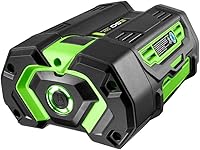
A spare EGO POWER+ 5.0Ah battery keeps a second pack charged and ready. It fits every EGO 56V tool, so the same pack runs a trimmer or mower.
How do you check a blower's airflow path for blockages?
Trace the path from intake to nozzle before you touch the engine. A blocked nozzle or a packed impeller starves airflow even when the engine runs perfectly.
Look into the nozzle for a wedged leaf, a twig or a clump of wet grass. Wet debris packs tight, and a partial plug cuts CFM without any change in engine note.
Spin the impeller by hand with the blower off. It should turn freely; grit or string wound around the shaft adds drag.
Check the intake grille for leaves caught against it. On a vacuum-capable model, clear the bag and the intake tube too.
Swap nozzles as a test where the blower takes them. The EGO LB7654 and LB6504 both ship with a tapered and a spread nozzle, and running the wider spread nozzle on the same debris separates a real power problem from a narrow nozzle doing its job.
For a baseline on how much airflow your blower should deliver, see what is a good CFM for a leaf blower.
Is it worth fixing, or should you replace the blower?
Fix it if one service restores the rpm. Clean the filter, refresh the fuel, clear the nozzle and charge the battery; most bogging clears with those steps.
Replace it when a full service doesn't help. Low compression on a worn engine, a cracked carburetor body or a failing motor can bog no matter how well you tune the rest.
A blower that only bogs on the heaviest jobs may simply be undersized for the leaves you're moving. Wet leaves and caked grass ask for more CFM than dry ones.
Weigh the trade-offs before you shop. Our guide to how much does a leaf blower weigh covers what to expect from gas and battery models.
How do you stop a blower from bogging down next season?
Store it dry and clean. Empty the fuel tank or run the engine until it stops on a fresh mix, then fog the cylinder as the manual directs if the blower will sit for months.
Clean or replace the air filter before storage and cap the nozzle so debris stays out. Charge battery packs to the level the maker recommends and store them indoors.
Check the spark plug and spark arrestor each spring before the first big cleanup. A few minutes of prep keeps the engine pulling hard when leaves pile up.
Noise matters too, especially in close neighborhoods. Our look at how loud is a leaf blower explains the decibel range you can expect.
And if you're weighing gas against battery on broader grounds, see why are leaf blowers bad for the environment.
When your leaf blower is bogging down, start with the filter and the fuel, then clear the airflow path. If those don't fix it, the battery or the engine is asking for service, and a cordless model with a spare pack removes the most common cause for good.
Frequently asked questions
Does a leaf blower bog down when the tank is nearly empty?
Yes. Near the bottom of the tank the engine can pull air along with the last of the fuel, which leans out the mixture and drops rpm.
Refill and check the fuel line and filter before chasing bigger problems.
Can I fix a bogging blower without rebuilding the carburetor?
Often, yes. A fresh air filter, a clean spark arrestor, a new fuel mix and a carburetor cleaner run through the system solve most mild bogging.
Rebuild the carburetor only when it still stumbles after those steps.
Does a dull or wrong spark plug cause bogging?
A fouled or wrongly gapped plug can misfire under load, which feels like bogging. Swap it for the plug the engine maker specifies and set the gap as directed before judging the carburetor.
Is bogging ever a sign to replace the blower?
Sometimes. A worn engine with low compression, a cracked carburetor body or a failing motor can bog no matter how well you tune it.
If a full service doesn't restore rpm, weigh a repair against a new unit.