Battery vs Gas Leaf Blower: Which Fits Your Yard? (October 2026)
Choose a battery blower for quieter, simpler cleanup near home; choose gas for fuel-powered operation and a quick-start routine. Yard size, run time and the work you do matter more than the power source alone.
On this page (6 sections)
Choose a battery leaf blower for quieter, straightforward cleanup; choose gas if you prefer a fuel-powered engine and don't want to plan work around a charged battery. This battery vs gas leaf blower comparison comes down to your yard, runtime needs and tolerance for noise and engine upkeep.
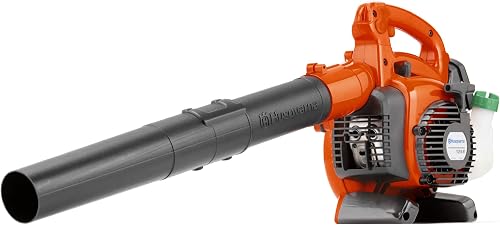
The EGO LB6504 is rated at 650 CFM and up to 90 minutes on its included battery. The Husqvarna 125B is rated at 470 CFM and uses a 28 cc, 2-cycle engine.
The Greenworks 80V adds a battery option rated at 770 CFM. Those airflow numbers are maker specifications, not a direct measure of how quickly each blower will clear your yard.

Battery vs gas leaf blower: which fits your yard?
Choose battery for cordless cleanup with less noise; choose gas if you want a blower powered by fuel. Think about the size of the area you clear and how long each session usually takes.
The EGO weighs 12.9 pounds, the Husqvarna weighs 9.4 pounds and the Greenworks weighs 6 pounds. Weight is one part of handling, so compare it with the controls, balance and time you'll hold the blower.
For more context on battery and corded models, see our guide to electric leaf blowers. If you're weighing battery capacity, our leaf blower battery runtime guide explains what affects work time per charge.
How do battery and gas blowers compare on power?
Compare the airflow and speed figures for the exact models, then match them to your debris. The EGO reaches up to 650 CFM and 180 MPH in Turbo mode, the Husqvarna is rated at 470 CFM and 170 MPH, and the Greenworks reaches 770 CFM and 180 MPH.
CFM measures air volume, while miles per hour describes air speed. Neither figure alone tells you how a blower will handle every pile, surface or wet leaf.
The EGO's variable-speed dial ranges from 225 to 470 CFM, with Turbo available for its higher stated airflow. Greenworks offers variable speed from 20 to 180 MPH and cruise control; its 80-minute runtime figure is at 50% load.
The Husqvarna combines its 28 cc engine with a stated 12.5 N blowing force. If airflow ratings are unfamiliar, our guide to what makes a good CFM for a leaf blower explains how to use them when comparing models.
Battery vs gas blower for wet leaves
Choose based on the blower's stated output and the amount of wet debris, rather than assuming every gas or battery model handles it the same way. EGO describes Turbo mode for wet leaves and caked-on grass, while Greenworks describes its 770 CFM model for wet debris.
Those are maker descriptions, not a guarantee for every pile or yard. Wet leaves can cling to grass and gather against edges, so use a controlled speed and work in manageable sections.
For routine cleanup, technique matters too. Our guide to blowing leaves efficiently covers how to move debris into a pile without spreading it across the yard.
Which type is quieter around the house?
The battery models in this comparison have lower stated noise levels than the gas model. EGO lists 64 dB, Greenworks lists 74 dB and Husqvarna lists 94 dB.
Noise figures describe these specific models, not every battery or gas blower. Distance, surfaces and how you operate the tool can affect what neighbors hear.
If noise is a key factor, check the exact model's rating and any local rules before you buy. Our guide to leaf blower noise levels explains how to interpret decibel figures.
Do battery blowers have enough runtime?
Battery runtime can cover a yard cleanup, but the rated time depends on model and operating load. EGO gives up to 90 minutes with its included 5.0Ah battery, while Greenworks gives up to 80 minutes at 50% load with its 4.0Ah battery.
High-speed use can draw down a battery sooner than light work. If you regularly clear a large area, consider how long each session takes and whether you can pause to recharge.
The EGO's included battery takes 100 minutes to charge with its included charger. Greenworks says its charger is included, but the charging time isn't specified here.
Gas avoids a recharge pause if you have fuel available, but it brings engine and fuel care. Pick the option that fits how you schedule yard work, not just the longest runtime figure.
What upkeep does each power type need?
Battery blowers avoid the fuel and 2-cycle engine routine, while gas blowers require attention to their engine and fuel. Both types need storage and care according to their manuals.
The Husqvarna has an air purge to remove air from the carburetor and fuel system for startup, plus an auto-return stop switch. Its cruise control can be set to ease speed handling during longer jobs.
The EGO and Greenworks use brushless motors. EGO includes a 5-year tool warranty and 3-year battery warranty; check the warranty terms for your location and exact purchase.
For battery storage, follow the manufacturer's instructions and keep the battery in a suitable place between seasons. Our leaf blower storage guide covers the basic planning.
Which blower should you choose?
Choose the EGO for its variable-speed dial and up to 90-minute runtime, the Husqvarna for a lighter gas option, or the Greenworks for the highest stated CFM here. Your choice should follow your usual cleanup and the work time you need.
If you want cordless power with a higher stated airflow, start with Greenworks. If you value the EGO's speed control and included battery warranty, compare it with your work pattern; choose the Husqvarna when fuel-powered operation better suits your routine.
Frequently asked questions
Is a battery leaf blower powerful enough for a yard?
It can be, depending on the debris and the blower. The EGO is rated at up to 650 CFM, while the Greenworks is rated at 770 CFM.
Compare airflow and speed with the leaves, clippings and hard surfaces you need to clear, and remember that runtime varies with how hard you run the blower.
Does a gas leaf blower run longer than a battery blower?
A gas blower can keep working while you have fuel available, while a battery blower needs a charged battery. The EGO's included battery is rated for up to 90 minutes, and Greenworks gives up to 80 minutes at 50% load.
Actual work time depends on speed and conditions.
Which type of leaf blower is quieter?
The battery models here have lower stated noise levels: 64 dB for the EGO and 74 dB for the Greenworks, compared with 94 dB for the Husqvarna gas blower. These figures are model-specific, so check the exact blower and follow local noise rules.
Is a gas leaf blower heavier than a battery blower?
Not in every comparison. The Husqvarna 125B weighs 9.4 pounds, the EGO LB6504 weighs 12.9 pounds, and the Greenworks 80V weighs 6 pounds.
Check the exact model's listed weight and consider how long you'll hold it, since balance and handling also affect comfort.
Which leaf blower needs less upkeep?
Battery models avoid the gas engine and fuel mix used by a 2-cycle blower, so they suit buyers who want to skip that engine routine. Batteries still need charging and storage care.
Follow each model's manual for maintenance, fuel and battery instructions.


