Electric Leaf Blowers: Battery and Corded Models Explained
Electric leaf blowers come in battery and corded models: battery tools give you room to move, while corded tools run as long as they have power. Choose by yard size, cleanup time and whether you want a blower, vacuum or both.
On this page (6 sections)
An electric leaf blower runs on a rechargeable battery or a power cord. Battery models are easier to move around a yard, while corded models provide continuous power near an outlet; choose based on your yard layout, cleanup time and need to collect leaves.
For a smaller yard with nearby outlets, a corded blower may be enough. For scattered areas or longer distances from the house, cordless operation removes the cord from your path.
A blower-vac adds a collection and mulching option for leaves you want to bag.
This guide explains the trade-offs and the features that matter. For help narrowing down a cordless option, see our best battery leaf blowers for home yards guide.
What kinds of electric leaf blowers can you buy?
Electric leaf blowers come in battery, corded and blower-vac designs. Some tools focus on moving debris, while combination models can also vacuum and mulch leaves.
| Type | Main advantage | Main trade-off |
|---|---|---|
| Battery blower | No power cord to manage across the yard | Runtime depends on the battery and speed setting |
| Corded blower | Continuous power while connected to an outlet | The cord limits reach and needs to be managed |
| Blower-vac | Can move, collect and mulch leaves | Collection work adds a bag and mode changes |
These categories can overlap. A corded blower-vac combines plug-in power with vacuuming and mulching, while battery blowers may include speed controls or a turbo mode.
What does electric leaf blower airflow tell you?
CFM measures the volume of air moved, while MPH measures air speed. Both numbers can help compare blowers, but neither alone tells you how well a tool will handle your yard.
For example, the EGO LB6151 is rated at 615 CFM and up to 170 MPH. The WORX WG520 is rated at up to 600 CFM and 110 MPH.
Their designs and controls also differ, so consider what surfaces and debris you plan to clear.
Our guide to what makes a good CFM for a leaf blower explains how to read airflow figures alongside your cleanup needs. If voltage is part of your comparison, see what voltage leaf blower is best for your yard.
Is a battery or corded leaf blower better?
Battery models suit yards where cord reach would get in the way; corded models suit cleanup near an outlet. Neither power type is the right fit for every property, so consider your route and typical session length.
A battery blower lets you move without an extension cord crossing walkways or garden beds. You do need to account for charging and the runtime available for the work.
Check the maker's stated runtime and the speed setting it applies to, since high power can use the battery faster.
A corded blower keeps running while it has power, which can help during longer sessions. The cord adds setup and reach limits, and you need to keep it clear of the area you are blowing.
For a closer look at the trade-offs, read corded vs cordless leaf blower: pros and cons. If you want a corded tool, our best corded electric leaf blowers guide covers options for home use.
Which electric leaf blower fits your yard?
Choose by area, outlet access, debris and whether you need to collect leaves. A small patio, a broad lawn and a leafy driveway can call for different setups.
For open areas and varied yard cleanup
A cordless blower can make it easier to move between a lawn, driveway and patio without relocating an extension cord. The EGO LB6151 has variable speed from 200 to 480 CFM and a turbo mode with up to 615 CFM, according to its stated specifications.
Its included 2.5Ah battery is stated to provide up to 75 minutes of runtime, and the tool works with EGO 56V ARC Lithium batteries. That runtime is a maker figure, not a promise for every speed or yard condition.
If you have a larger yard or often move wet leaves, compare airflow and battery needs across models. The Greenworks 80V 700 CFM includes an 80V battery and charger, and its features include variable speed and cruise control.
Greenworks gives a 74 dB noise figure for this model. Check the manufacturer's current operating guidance and use suitable hearing protection when needed.
For cleanup near an outlet
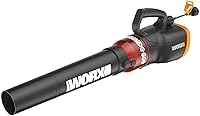
A corded blower is a practical fit when the outlet is close enough for your work area and you can route the cord safely. The WORX WG520 has variable-speed control, up to 600 CFM and a 12 amp motor.
Its 6.4 lb weight may matter if you carry a blower across a longer route. Plan where the extension cord will run before starting, and keep it behind your work area.
For leaves you want to collect and mulch
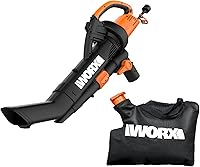
A blower-vac can move leaves into position, then vacuum them into a collection bag for disposal or composting. The WORX Trivac WG509 switches between blow and vacuum modes and includes a 42 L collection bag.
It has a stated 18:1 mulch ratio and up to 350 CFM. Its corded design supports continuous use near an outlet, while the bag and mode changes add steps compared with a blower used only to move leaves.
See our best leaf vacuum mulchers for fall cleanup guide if collection and mulching are central to your choice.
What should you check before choosing?
Compare runtime or cord reach, airflow controls, weight and collection features before settling on a model. These details affect how the tool fits the work you actually do.
- Runtime or outlet access: Estimate how long a typical cleanup takes. For cordless tools, compare the stated runtime with your needs; for corded tools, check that a safe cord route reaches the work.
- Airflow and speed controls: Variable speed can help you use gentler airflow near plants or stronger airflow on open surfaces. Compare CFM and MPH together, then consider the nozzle and task.
- Weight and handling: A tool's weight can affect comfort as you move it around. Check the listed weight and consider how long you'll hold it.
- Vacuum and mulch functions: Choose these if you want to collect leaves. A blower-only model may be simpler when you plan to move leaves into piles.
- Noise: Compare the stated noise figures where available and follow local rules for yard equipment.
A higher airflow rating alone doesn't guarantee a better fit. A blower that's easy to control and reach the whole work area can be more useful than one chosen for a single large number.
How do you use an electric leaf blower efficiently?
Work with the wind and your cleanup route, moving leaves toward a planned collection spot. Use lower airflow for controlled areas and save stronger settings for open space or stubborn debris.
Start at the outer edges and clear leaves in sections rather than chasing loose leaves across the yard. Direct airflow at a shallow angle so debris moves along the ground instead of lifting and scattering.
Keep a safe distance from people, pets, windows and loose items. Check the manual for operating guidance, and wear eye protection; use hearing protection when appropriate.
For a step-by-step method, read how to blow leaves efficiently and finish faster. For a vacuum model, how to use a vacuum leaf blower to bag and mulch covers the collection step.
Which electric leaf blower should you choose?
Choose battery power when freedom to move matters most, corded power when you have outlet access and want continuous operation, or a blower-vac when collecting and mulching leaves will save a separate step. Match airflow, controls and weight to your yard rather than choosing on a single spec.
If you're still comparing cordless models, start with our best battery leaf blowers for home yards guide. For the wider topic cluster, visit the blower basics hub.
Frequently asked questions
Are battery leaf blowers powerful enough for a yard?
Battery leaf blowers can suit many home yards, but match airflow and battery runtime to the debris and area you need to clear. Some models offer variable speed or a higher-power mode for heavier cleanup.
Check the maker's runtime figure and remember that it may depend on the speed setting.
Is a corded electric leaf blower better than a battery model?
A corded electric leaf blower is a good fit when you have an outlet nearby and want continuous power without charging a battery. A battery model gives you more freedom to move around the yard.
The better choice depends on your outlet access, yard layout and cleanup time.
Can an electric leaf blower vacuum and mulch leaves?
Some electric leaf blowers also vacuum and mulch leaves, collecting debris in a bag and reducing its volume. A 3-in-1 model can help if you want to gather leaves instead of moving them into a pile.
Check its vacuum and mulching features, bag capacity and cord requirements.
What does CFM mean on a leaf blower?
CFM means cubic feet per minute, a measure of the volume of air a blower moves. It can help you compare airflow across models, but it does not tell the whole story.
Air speed, nozzle shape, variable controls and the type of debris also affect how a blower fits your cleanup.
How should I choose an electric leaf blower?
Start with the area you clear, how long a typical cleanup takes and how far you are from an outlet. Pick cordless for freedom to move, corded for continuous power near an outlet, or a blower-vac if you want to collect and mulch leaves.
Compare airflow and controls for the debris you handle.