Why Are Leaf Blowers So Loud?
Leaf blowers are loud because they move a lot of air at high speed. Gas engines, spinning impellers and narrow nozzles all turn motor power into noise, and the closest ear is only a couple of feet from the outlet.
On this page (9 sections)
- Why are leaf blowers so loud compared with other yard tools?
- Which part of a leaf blower makes the most noise?
- Are gas or electric leaf blowers louder?
- How do speed, airflow and nozzle width change the noise?
- How close you stand and where you point it both matter
- Which quieter leaf blowers are worth a look?
- What can you do to reduce leaf blower noise?
- Why are leaf blowers so loud, in the end?
- Our score for these blowers
Why are leaf blowers so loud? They move a large volume of air at high speed, and that fast air plus the spinning fan and motor make the noise.
Gas engines add exhaust and combustion sound on top, which is why gas models usually top the decibel charts.
That single idea explains almost everything else about blower noise. The job needs moving air, the machine needs a fast fan to make it, and the outlet sits close to your ear.
Why are leaf blowers so loud compared with other yard tools?
A leaf blower is loud because its whole job is moving air fast, and fast air is noisy. A mower cuts grass with a blade, but a blower has to push a wide stream of air across a lawn or driveway.
The fan spins at high speed to build pressure and volume. Air rushing through the housing and out the nozzle creates turbulence, and turbulence is sound.
The closer you stand to the outlet, the louder it gets.
The numbers back this up. Gas backpack blowers often land in the high 80s to 90s dB at the operator's ear.
Cordless models like the Ryobi 40V HP Whisper sit lower, but none is quiet in the way a rake is quiet. Our guide to how loud is a leaf blower breaks down typical decibel ranges by type.
Which part of a leaf blower makes the most noise?
The engine and the impeller are the two main sources, and the nozzle shapes how the sound travels. On a gas blower, the engine and exhaust often dominate.
On an electric model, the fan and the moving air are the main contributors.
Gas engine and exhaust noise
A gas two-stroke engine fires many times a second, and each firing is a small pressure pulse. The exhaust releases those pulses as sound, and the engine's cooling fan and vibration add more.
That's why gas blowers carry a deep, pulsing roar that travels far.
Impeller and airflow noise
An impeller is a spinning fan that pulls air in and throws it out. At high speed, blade tips cut through the air and create a whine.
The faster the impeller spins, the higher the pitch and the more air noise you hear.
Nozzle and housing noise
The nozzle concentrates airflow. A narrow tube makes the air move faster and raises the pitch.
The housing and the gap around the impeller also add turbulence, and hard surfaces like driveways reflect the sound back at you.
Are gas or electric leaf blowers louder?
Gas blowers are usually louder than electric ones, because they add engine and exhaust noise to the airflow. Electric motors still make fan noise, but they skip combustion, exhaust pulses and fuel-related vibration.
The gap shows up in the specs. The WORX WG585 lists a noise level of 71 dB.
That's a cordless 40V model with a brushless motor, and it sits well below the range gas blowers typically reach.
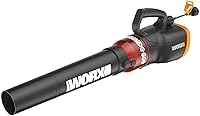
Corded models land in the middle. The WORX WG520 runs a 12 Amp motor and turbine fan, so it makes steady airflow noise without a gas engine's roar or a battery's power electronics.
If noise is your main concern, a brushless electric model is the practical starting point. For a deeper look at the environmental side of blower use, see why are leaf blowers bad for the environment.
How do speed, airflow and nozzle width change the noise?
More speed and narrower nozzles mean more noise. A blower's noise rises with impeller speed, and the way air leaves the tube changes how sharp it sounds.
CFM measures air volume and MPH measures air speed. A high-MPH setting pushes air through faster and usually gets louder.
Turbo modes on cordless models trade extra noise for extra clearing power.
Nozzle width matters just as much. A wide tube spreads the same airflow over a larger opening, so the air leaves at a lower speed and a softer pitch.
A narrow tube focuses the stream and raises both speed and sound.
That's the practical lever for most homeowners. Run a lower speed and a wider nozzle for light leaves, and save the high setting for wet piles or heavy debris.
Our guide to what is a good cfm for a leaf blower helps you match airflow to the job.
How close you stand and where you point it both matter
Sound falls off with distance, so stepping back and aiming away from hard surfaces cuts the noise you hear. A blower outlet near your ear is the worst position, and walls, cars and driveways bounce sound straight back.
Keep the tube pointed down and away from buildings when you can. Working across a lawn absorbs more sound than blasting a concrete driveway.
Bystanders and pets should stay well back, especially with gas models.
The machine's own weight also affects how you use it. A heavy blower held close to your body is harder to aim away from surfaces, so check how much does a leaf blower weigh before you pick a model for long sessions.
Which quieter leaf blowers are worth a look?
A brushless electric blower is the simplest way to cut noise without giving up clearing power. These three models cover the main options: battery convenience, steady corded airflow and low-noise cordless work.
Best for quieter cordless blowing: Ryobi 40V HP Whisper
The Ryobi 40V HP Whisper carries a Whisper badge and a brushless motor, which is the first thing to look for when noise matters. It delivers 650 CFM at up to 160 MPH and runs on a 40V battery.
The adjustable speed and throttle lock let you hold a lower setting for light leaves, and turbo is there for the heavy stuff. It's a tool-only package, so the battery and charger are separate.
At 14.3 lb it's the heaviest of the three, so plan on a two-handed grip.
Best for steady corded power: WORX WG520
The WORX WG520 runs on a 12 Amp corded motor and moves up to 600 CFM at 110 MPH. A cord means no battery running down, so airflow stays constant for a long cleanup.
Variable speed control lets you drop to a quieter setting near landscaping. It weighs only 6.4 lb, which makes it easy to aim away from walls and hold at a comfortable distance.
The cord is the trade-off, so you'll want an outdoor extension rated for the load.
Best for low-noise cordless cleanup: WORX WG585
The WORX WG585 is a 40V brushless cordless model with a listed noise level of 71 dB. It reaches up to 620 CFM and 165 MPH across three speeds plus turbo.
The brushless motor runs longer than a brushed one, and the kit includes two 4.0Ah batteries and a dual charger. At 6.4 lb with the battery, it's light enough for one-handed work on patios and walkways.
What can you do to reduce leaf blower noise?
Use the lowest speed that clears the debris, fit the widest nozzle your blower allows, and keep the tube away from hard surfaces. Those three changes cut noise more than any single accessory.
Keep the intake and housing clean, since a clogged intake makes the motor work harder and sound harsher. Check that the tube is seated firmly; a loose nozzle rattles and leaks air.
Sharp, well-maintained parts also run smoother.
Time your work for daylight hours and check local rules on blower use. Many towns set quiet hours or seasonal limits, and a quick check avoids complaints.
Wear hearing protection for long sessions, and keep bystanders and pets back.
Why are leaf blowers so loud, in the end?
The answer is airflow and motor type: leaf blowers are loud because they push high-speed air, and gas engines add exhaust noise on top. That's why a gas backpack blower roars while a brushless cordless model hums at a lower pitch.
If you want less noise, pick an electric model first. Choose the Ryobi 40V HP Whisper for a quieter cordless blower with a throttle lock.
Pick the WORX WG520 for steady corded airflow and a light 6.4 lb body. Go with the WORX WG585 for a 40V brushless kit rated at 71 dB.
Run any of them at a lower speed and a wider nozzle, and the difference is easy to hear.
Our score for these blowers
Our score weighs specs, features and buyer feedback against what you're shopping for. For noise, that means motor type, listed decibel level, speed control and how easy the blower is to aim away from hard surfaces.
Frequently asked questions
How loud is a typical leaf blower in decibels?
Many handheld models run in the 70s to high 80s dB range at the operator's ear. Gas backpack blowers often reach the 90s and beyond, while newer brushless electric models sit lower.
Are electric leaf blowers quieter than gas ones?
Yes, most electric models are quieter because they skip the engine and exhaust. Corded and battery blowers still make fan and airflow noise, so the gap is real but not silent.
Does a leaf blower's nozzle make it louder?
A narrow nozzle speeds up the air and raises the pitch. A wider tube spreads the same airflow over more area, which usually sounds less sharp at the same motor speed.
Is leaf blower noise bad for hearing?
Long exposure to loud blowers can damage hearing, so ear protection is worth wearing. Keep bystanders and pets at a distance, and check local rules on hours and decibel limits before you start.