How to Use a Corded Leaf Blower
Plug the blower into a grounded outdoor outlet, fit the nozzle, and sweep leaves in one direction so they gather into a pile. Hold the tube a few inches off the ground and work with the wind, not against it.
On this page (9 sections)
- What do you need before you start a corded leaf blower?
- How do you plug in and manage the cord safely?
- How do you hold and aim the tube for clean passes?
- Which speed should you use in each part of the yard?
- How do you clear leaves from a lawn without harming it?
- How do you handle wet leaves and stubborn debris?
- How do you blow leaves into a pile instead of scattering them?
- How do you store a corded blower so it's ready next time?
- Which corded blower suits how you plan to use it?
Plug the blower into a grounded outdoor outlet, fit the nozzle, and sweep leaves in one direction so they gather into a pile. Hold the tube a few inches off the ground and work with the wind, not against it.
That is the short version of how to use a corded leaf blower well: steady passes, the right speed, and a cord you manage instead of fight.
Corded blowers trade battery freedom for steady power from an outlet. That suits a driveway, a sidewalk, or a lawn near the house, and it means a few habits matter more than on a cordless model.
The sections below cover each one.
What do you need before you start a corded leaf blower?
You need a grounded outdoor outlet, a heavy enough extension cord, and the blower's tube fitted firmly. Safety glasses and hearing protection are worth adding for long sessions.
Check the manual for the cord gauge it wants and match it. A thin cord on a long run drops voltage, so the blower feels weaker than its rating suggests.
Keep the total length within what the maker lists. Corded models in this class carry noise ratings worth knowing about, from 71 dB on the Craftsman CMEBL710 to 75 dB on the Black+Decker BEBL750, so ear protection earns its place on longer jobs.
Clear the work area first. Pick up rocks, toys, and pet waste, because a blower turns small hard objects into projectiles.
Move cars off the driveway and check that windows and doors are shut.
Dress for the dust. Long pants and closed shoes protect your legs when you blow along a curb or under shrubs.
How do you plug in and manage the cord safely?
Run the cord behind you and lock the plugs together before you squeeze the trigger. A cord that trails in front of the tube gets dragged, tripped on, or yanked out.
Many corded blowers include a cord retention hook or clip near the handle. Push the extension cord and the blower's plug into it so the connection stays put.
If yours lacks one, tie a loose loop in the two cords just past the plug. The Black+Decker BEBL750 has built-in cord retention, which matters most when you work near the end of a long run.
Route the cord along the edge of the lawn or driveway, not across the middle where you'll walk. Work away from the outlet so you never loop the cord around your feet.
Keep the connection behind you and let the tube lead the way.
Keep the plug and outlet dry. If rain is coming or the ground has standing water or puddles, stop and wait for a dry day.
Damp leaves on a safe surface are fine to blow.
A corded blower and standing water are a bad pair.
How do you hold and aim the tube for clean passes?
Hold the tube a few inches above the surface and sweep in steady, parallel passes. Aim the air at the leaves, not at the sky.
Stand with the tube at hip height and walk backward or sideways as you blow, so leaves move ahead of you. Keep the nozzle pointed slightly down.
That keeps the airflow under the leaves and pushes them along instead of scattering them.
Overlap each pass by about half the tube's width. A tight pattern gathers leaves into a line you can then push into a pile.
Wide, wild swings only spread the mess. Axial models like the Black+Decker BEBL750 and the Craftsman CMEBL710 push air straight down the tube in a narrow stream, so overlapping passes matters more than with a wide turbine fan.
Hold the blower with one hand if its weight allows and steady the tube with the other. Keep your wrist relaxed and let your arm do the work.
These handheld models weigh between 6.4 and 7 lb, so a relaxed grip staves off fatigue on a whole-yard session.
Which speed should you use in each part of the yard?
Use low speed on beds, gravel, and mulch, and high speed on hard, open surfaces. Matching the speed to the surface saves cleanup and protects your landscaping.
Low speed: beds, mulch, gravel, and around plants
Low airflow lifts leaves without moving the surface underneath. Blow gently between flowers and shrubs, and work from the plant out toward open ground.
On the Black+Decker BEBL750 and the Craftsman CMEBL710, low is one click of the two-speed switch. The WORX WG520 uses variable speed instead, so you ease the trigger down until the airflow just lifts leaves.
Keep the tube back from soft new growth. A hard blast can shred tender plants and strip mulch from beds.
For detail work around planting beds and lawns, see our guide on how to use a leaf blower on lawn.
High speed: driveways, sidewalks, and patios
High airflow moves big volumes of leaves fast on hard surfaces. Sweep along the driveway edge so debris collects in one line rather than blowing back across the pavement.
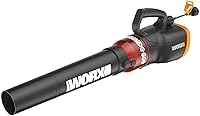
High is where the axial models hit their 140 MPH and where the WORX's 600 CFM does its best work.
Blow leaves toward a tarp or a pile, not toward a storm drain. Sweeping everything into the drain sends yard waste into waterways and can clog it.
How do you clear leaves from a lawn without harming it?
Blow leaves off the grass rather than into it. Long passes at low to medium speed lift the leaves and carry them toward the pile without tearing turf.
Don't dig the tube into the grass. Keeping it an inch or two up lets air slide under the leaves.
If a layer is thick and matted, loosen it with a rake first, or use the blower's scraper tip.
Work in a spiral toward the collection point on open lawns. A 450 CFM axial model moves a lawn's worth of leaves in steady passes without stripping the turf the way a hard blast can.
For edges and hard-to-reach spots, a lighter tool can help; our pick of the best corded leaf blowers covers models that suit different yard sizes.
How do you handle wet leaves and stubborn debris?
Wet leaves cling to surfaces and move in slow clumps. Drop to low speed and bring the tube closer to the ground, then loosen stuck leaves with a scraper tip or rake before blowing again.
Many corded blowers include a scraper on the nozzle for this job. The Black+Decker BEBL750 and the Craftsman CMEBL710 both build one into the tube, so you can nudge leaves off concrete and steps without a separate tool.
Skip the temptation to run high speed on wet leaves. The extra air just splatters them across the surface instead of moving them.
How do you blow leaves into a pile instead of scattering them?
Aim every pass at one collection point and let the wind help. Check the breeze first and blow downwind so the leaves keep moving your way.
Pick a spot with a wall, fence, or tarp to catch the leaves. Start at the far edge of the yard and work toward that point in rows.
Short, controlled passes beat long sweeping arcs. A wide airflow stream from a turbine model like the WORX WG520 covers more ground per pass on open areas, while the narrower axial stream suits tight lines along edges.
Finish with a light pass to tidy the edges of the pile. When the pile is ready, bag it for yard waste or move it to a compost bin.
How do you store a corded blower so it's ready next time?
Coil the cord loosely, clean the tube, and hang the blower somewhere dry. A few minutes of care keeps the tool working season after season.
Let the blower cool, then wipe dust and leaf bits off the intake and tube. Check the tube for cracks and clear any packed debris from the nozzle.
Wrap the cord in a loose loop rather than tight coils around the handle. The Craftsman's ABS plastic body and blower tube wipe down easily, and the WORX WG520 has a 3-year manufacturer limited warranty worth keeping the receipt for.
Store it indoors or in a dry shed, not on damp ground. The Craftsman CMEBL710 has an integrated hook for the VERSATRACK wall system if you want it off the floor.
Hang it by the handle or the hook so the tube doesn't rest on concrete.
Some corded models also vacuum and mulch; see how to use a vacuum leaf blower if yours does. To weigh plug-in power against battery freedom, read corded vs cordless leaf blower.
Which corded blower suits how you plan to use it?
Pick the Black+Decker 450 CFM Corded if you want an easy first blower, the WORX WG520 if you need the most airflow, and the Craftsman CMEBL710 for wet-leaf scraper work.
The Black+Decker's two speeds and scraper tip make it forgiving for a beginner, while the WORX's 600 CFM and variable speed suit bigger piles and longer driveways. The Craftsman stays light at 6.7 lb and adds storage-friendly design.
All three are corded, so none needs battery charging or gas refills, and each starts with a trigger pull rather than a pull cord.
Learning how to use a corded leaf blower comes down to a few habits: manage the cord behind you, match speed to surface, and sweep in steady rows toward one pile. Pick the model that fits your yard, then practice short passes on the driveway first.
Frequently asked questions
Can you use a corded leaf blower on wet leaves?
Yes, but a corded blower moves wet leaves slowly and in clumps. Lower the tube closer to the ground, use the low speed so leaves don't stick to surfaces, and loosen matted leaves with a rake or the blower's scraper tip before blowing.
How long should the extension cord be for a corded leaf blower?
Pick a cord long enough to reach your whole yard without stretching, and check the blower's manual for the gauge it needs. A heavier gauge carries power further with less voltage drop.
Never plug two extension cords together or run a cord through standing water.
What speed should I use for flower beds and gravel?
Use the low setting on beds, gravel, and mulch. High speed scatters mulch, soil, and light gravel, while low speed lifts leaves without moving the surface underneath.
Switch to high only on open hard surfaces like driveways and sidewalks.
Is it safe to blow leaves while it is raining?
No. Skip blowing in rain or when the ground is wet enough to puddle, because water and a plugged-in tool don't mix.
Wait for a dry stretch, and keep the cord, plug, and outlet away from damp ground at all times.
How do I stop the extension cord from coming unplugged?
Use the blower's cord retention hook or clip to lock the two plugs together, and loop the cord loosely around your wrist or a belt loop as you work. Keep the connection behind you so the tube never drags across it.
Can a corded leaf blower clear gutters and a roof?
Only from the ground with a gutter kit and the blower's own tube, never while standing on a ladder holding a plugged-in tool. Many makers sell gutter attachments, but check your manual first and keep both feet on the ground.