Are Electric Leaf Blowers as Powerful as Gas?
Yes. A modern battery leaf blower can match or beat a typical gas handheld on airflow and air speed. The numbers to compare are CFM for volume and MPH for speed, and cordless models now reach 700 to 765 CFM.
On this page (8 sections)
- What do CFM and MPH actually tell you about power?
- Are electric leaf blowers as powerful as gas on paper?
- Where does gas still have the edge?
- How does battery power compare with gas for typical yard jobs?
- Is a corded electric blower powerful enough to replace gas?
- Which battery blowers match gas power in real yards?
- What about noise, fumes and upkeep?
- So, are electric leaf blowers as powerful as gas?
Yes. A modern battery leaf blower can match or beat a typical gas handheld on airflow and air speed.
The numbers to compare are CFM for volume and MPH for speed, and cordless models now reach 700 to 765 CFM.
That figure is the key part of the answer to "are electric leaf blowers as powerful as gas." The gap that existed a decade ago has mostly closed for handheld and backpack-sized machines used in home yards.
What do CFM and MPH actually tell you about power?
CFM measures air volume and MPH measures air speed, and the two together describe real blowing force. A blower with high CFM but low MPH pushes a wide, slow stream; one with high MPH but low CFM moves a narrow, fast jet.
CFM stands for cubic feet per minute. It tells you how much air the fan moves, which matters for sweeping a wide driveway or gathering a big leaf pile.
MPH is miles per hour of air at the nozzle, which helps break a leaf's grip on wet grass or loosen debris stuck in a corner.
Neither number alone wins a job. A blower rated 765 CFM at 200 MPH moves more total air and faster air than a typical gas handheld, while a 600 CFM at 110 MPH corded model sits in the middle.
Read both specs and the nozzle type before deciding.
The third spec that rarely gets quoted is how the air is delivered. Turbine fan engineering shapes a wide, steady stream rather than a narrow blast, and EGO points to it when the brand says its blowers perform better than premium gas models.
Nozzle choice then decides whether that stream stays wide for a driveway or tightens up for wet leaves in a bed.
Are electric leaf blowers as powerful as gas on paper?
On paper, the best cordless electric models now meet or exceed common gas handhelds. EGO says its LB7654 turbine fan reaches 765 CFM and 200 MPH, and describes that engineering as giving it better performance than premium gas blowers.
Greenworks makes a similar case for its 80V blower, rated 700 CFM and 170 MPH, with a turbo boost and a claim that it outperforms 27cc gas models. Those are maker claims, but the CFM and MPH numbers are published specs you can line up against a gas unit.
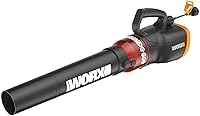
Corded models sit lower but stay useful. The WORX WG520 is rated 600 CFM and 110 MPH on a 12 Amp motor, enough for leaves, grass clippings and debris on lawns, driveways and patios.
See how battery and corded models differ in our electric leaf blower overview.
How to read maker claims without getting fooled
Treat "outperforms gas" as a claim about a class, not a guarantee against every gas blower. EGO compares its 765 CFM handheld to premium gas blowers and Greenworks compares its 80V to 27cc engines, so the honest comparison is against a similar-sized handheld.
What you can verify is the spec sheet. Match CFM against CFM, MPH against MPH, and check whether the turbo figure is the headline number or a momentary boost.
A blower sold on a 765 CFM turbo rating and a 580 CFM cruise setting is telling you two different things about everyday work.
Where does gas still have the edge?
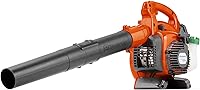
Gas still wins on total run time and on the largest backpack and commercial blowers. A gas tank refills in seconds and a big backpack unit can run for hours, which suits crews clearing several properties in a day.
Battery runtime is measured per charge. The EGO kit's 5.0Ah battery runs up to 90 minutes on lower settings, and a full-power turbo pass drains it faster.
A spare pack solves that for most homes but not for all-day commercial work.
Weight and vibration also favor electric in the handheld class. The EGO weighs 9.5 lb and runs at 64 dB, and the Greenworks 80V weighs 5.8 lb at 74 dB.
Those figures make an electric blower easier to carry and quieter for a neighborhood.
The EGO kit's 5.0Ah battery is also part of the brand's 56V ARC Lithium platform. It works in other EGO tools and the blower accepts every battery in that line, so one pack can cover several yard tools.
Gas has no equivalent, which is one more reason the gap feels smaller at home than on a job site.
How does battery power compare with gas for typical yard jobs?
For most home yards, a battery blower handles the same jobs a gas handheld does. Leaves on a lawn, clippings on a walkway, debris on a deck and dust off a patio all fall within the reach of a 600 to 765 CFM model.
The work splits by surface. A wide, open driveway rewards high CFM so you can sweep in fewer passes.
Wet leaves and caked grass reward turbo mode and a narrower nozzle that concentrates the stream. Edges and beds reward variable speed so you don't scatter mulch.
That's why the spec sheet and the nozzle set matter more than the fuel type. A gas blower with the wrong nozzle on wet leaves will lose to an electric model set up correctly.
Battery models also let you dial the job down. The EGO's cruise dial spans 260 to 580 CFM outside turbo, so light cleanup around planting beds can run at low output and save charge for the heavy passes.
A gas engine idles at one volume and you work around it.
Is a corded electric blower powerful enough to replace gas?
A corded blower gives you steady power with no battery to manage, and it's strong enough for most home cleanup. The catch is the cord, which limits how far you can work from an outlet.
The WORX WG520 pairs a 12 Amp motor with turbine fan technology for a wide stream of air, plus variable speed control. At 6.4 lb it's light enough to carry through a longer session, and it starts without a pull cord.
Pick a corded model when your cleanup stays within reach of an outlet and you want continuous power without charging. Compare more options in our guide to the corded leaf blower class.
Which battery blowers match gas power in real yards?
The strongest battery models carry the airflow to stand in for a gas handheld. Two stand out for buyers who want gas-level clearing without the fumes and pull starts.
EGO LB7654: the closest match to gas
The EGO LB7654 is the strongest of the three on paper. It's rated 765 CFM and 200 MPH in turbo mode, with a cruise dial from 260 to 580 CFM for controlled work and a 5.0Ah battery that runs up to 90 minutes and charges in 70 minutes.
Its turbine fan engineering is what EGO points to when the brand says the blower performs better than premium gas models. The kit includes tapered and spread nozzles, and the tool carries a 5-year warranty.
See how it lines up against fuel in our battery vs gas leaf blower comparison.
Greenworks 80V 700 CFM: lighter and quieter
The Greenworks 80V is the lighter option at 5.8 lb. It's rated 700 CFM and 170 MPH with a turbo boost, and Greenworks says the brushless motor lasts longer than gas models and runs quieter at 74 dB.
Variable speed plus cruise control lets you set a pace and save battery for longer jobs. It's the pick when carrying weight and noise matter more than the last few CFM.
Which of the two should you pick?
Choose the EGO when the job is big, wet or stubborn and you want the highest airflow in this group. Its 765 CFM turbo rating and 200 MPH top speed give it the most headroom against gas.
Choose the Greenworks 80V when you'll carry the blower for long stretches or live somewhere noise complaints are a concern. At 5.8 lb it's the easier tool to hold, and 74 dB is still quiet next to a gas engine.
Both run on their own battery platforms, so factor in whether you already own packs from either brand.
What about noise, fumes and upkeep?
Electric wins clearly on the things gas can't fix: noise, exhaust and maintenance. A gas engine runs loud, vents fumes and needs fuel, oil and spark plug care.
An electric motor runs quieter and needs no fuel.
The EGO is rated 64 dB and the Greenworks 74 dB, both well under typical gas handhelds. No pull cord, no choke, no mixing fuel.
That's a big part of why homeowners switch even when raw power is close.
Battery upkeep replaces engine upkeep. Keep packs charged and stored indoors, and the motor itself needs little beyond clean air intakes.
If a blower stops working, our guide to how to fix an electric leaf blower walks through common causes.
So, are electric leaf blowers as powerful as gas?
For handheld and home-yard work, yes: an electric leaf blower is as powerful as gas, and often quieter and easier to run. Pick by the job, not the fuel.
Go with the EGO LB7654 when you want the closest match to gas power and the highest CFM in this group. Choose the Greenworks 80V when a lighter, quieter 80V blower fits your yard.
Pick the WORX WG520 if your cleanup stays near an outlet and you want steady corded power.
Compare fuel types in full in our battery vs gas leaf blower guide, and match the model to your surfaces before you buy. That last step decides more about real blowing power than the fuel label ever will.
Frequently asked questions
Can an electric leaf blower move wet leaves?
Yes, a high-CFM battery blower can push wet leaves and caked grass. Turbo or boost modes matter most here, so look for a model rated around 700 CFM or more and use a narrower nozzle to concentrate the air.
How long can a battery blower run on one charge?
Runtime varies widely by model and speed setting. Some 5.0Ah battery kits run up to about 90 minutes on lower settings, while a full-power turbo pass drains the pack much faster, so plan big jobs around a spare battery.
Is a corded electric blower as strong as a gas one?
A corded model can deliver strong, steady airflow without a battery, often around 600 CFM. It won't outrun the biggest gas backpack blowers, but for a typical yard it holds its own as long as an extension cord reaches the work.
Why do gas blowers still exist if electric is as powerful?
Gas still wins on total runtime for very large properties and on raw power in commercial backpack sizes. Electric wins on noise, fumes, pull starts, and upkeep, which is why most homeowners now get enough power from a battery model.