How to Pick a Leaf Blower Without Overbuying
To pick a leaf blower, match its power source and airflow to your yard, then check weight, runtime, and attachments. A small patio needs less tool than a large yard with wet leaves.
On this page (10 sections)
- How do you pick a leaf blower for your yard?
- Should you choose battery, corded, or gas power?
- How much airflow do you need?
- What weight and handling should you check?
- How much runtime do you need from a battery blower?
- Do you need a blower vacuum and mulcher?
- Which features are worth paying attention to?
- How loud is too loud for a leaf blower?
- What should you compare before buying?
- How to pick a leaf blower without overbuying
To pick a leaf blower, match its power source and airflow to your yard, then check weight, runtime, and attachments. A small patio needs less tool than a large yard with wet leaves.
Start with the cleanup you actually do: sweeping a walkway, moving a season's worth of leaves, or collecting and mulching debris. That helps you avoid paying in weight, complexity, or unused power for features your yard doesn't need.
How do you pick a leaf blower for your yard?
Choose the lightest, simplest blower that can handle your typical debris and reach. A patio or short driveway may call for a compact sweeper, while a large yard or heavy leaf piles need more airflow and longer working time.
Think through where leaves collect and how far you need to move them. Hard surfaces are often easier to clear than wet, matted leaves or debris caught in grass and planting beds.
A blower can also be used for grass clippings, dust, and light snow when its maker lists those tasks. Decide which jobs matter before comparing tools.
Should you choose battery, corded, or gas power?
Choose battery for cord-free movement, corded power for long sessions near an outlet, and gas only if its extra maintenance and emissions fit your needs. For electric choices, map the distance from your outlet or battery charging spot to the farthest cleanup area.
Battery blowers let you move around the yard without dragging a cord. Check the stated runtime and whether you already own compatible batteries; see how long leaf blower batteries run per charge before assuming one charge will cover the whole job.
A corded blower avoids battery charging breaks, but the cord limits reach and needs attention around shrubs, steps, and walkways. Compare the practical tradeoffs in corded vs cordless leaf blowers.
Gas models may suit large properties where cord reach and battery runtime are poor fits. They require fuel and engine maintenance, and local rules may restrict when gas equipment can be used.
Does voltage tell you how powerful a leaf blower is?
Voltage is one comparison point, not a complete measure of clearing power. Battery platform, airflow, air speed, and speed control also matter.
Compare the maker's airflow and air-speed figures, and look for a low setting if you need to sweep around delicate areas. Our guide to what voltage leaf blower is best for your yard explains how to weigh voltage with the rest of the tool.
How much airflow do you need?
Pick airflow based on the debris and area, then make sure the blower has enough control for smaller jobs. High airflow can move larger piles, but it may scatter leaves in tight spaces if you can't lower the output.
CFM measures the volume of air moved, while miles per hour describes air speed. These numbers answer different questions, so don't choose by air speed alone.
See what a good CFM is for a leaf blower for more on comparing airflow figures.
For a small patio, the Greenworks 40V 135 CFM has a variable speed dial and a concentrator nozzle for tight spaces.
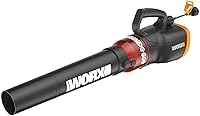
For open areas and larger leaf piles, the WORX WG520 provides corded airflow up to 600 CFM with variable-speed control.
These examples show why the intended job matters more than choosing the biggest number. If your yard has wet leaves or debris stuck to the ground, check whether the blower's maker describes a mode for that work.
What weight and handling should you check?
Choose a weight you can comfortably hold for the time your cleanup takes. A blower can feel manageable for a short pass and tiring across a large yard.
Check whether the tool is handheld or has a shoulder strap, and consider how you'll carry it between storage and the yard. Battery weight can affect handling, so look at the full setup rather than the bare tool if the battery is included separately.
The Greenworks 40V 135 CFM weighs 3.3 lb, while the EGO LB6151 weighs 7.5 lb. The WORX WG520 weighs 6.4 lb and uses a cord, so account for the cord as you plan to move around.
Read how much a leaf blower weighs for more on comparing tool weight and handling. Try to think about the whole session, including holding the tool overhead or reaching around beds.
How much runtime do you need from a battery blower?
Choose a battery setup that can cover your usual cleanup with time to spare. Runtime changes with speed and load, so a maximum figure shouldn't be treated as a promise for every task.
EGO says the LB6151 can run up to 75 minutes on its included 2.5Ah battery. It has a variable speed dial from 200 to 480 CFM and a turbo mode that reaches up to 615 CFM, giving you a choice between lower airflow and higher output.
If you already own tools in a battery platform, check compatibility before buying another charger or battery. An extra battery can extend the work session, but it adds cost and weight.
Do you need a blower vacuum and mulcher?
Choose a vacuum and mulcher if you want to collect leaves instead of only moving them. If you mainly clear paths and blow leaves into a pile, a standard blower is usually simpler.
The WORX WG583 Cordless Trivac switches between blowing and vacuuming, and its vacuum mode mulches leaves at a stated 12:1 ratio. Its wheeled vacuum tube can support the tool while collecting debris, but the listed weight is 11.3 lb.
Consider where the bag will fill and how you'll empty it. A vacuum setup may be useful for leaves on hard surfaces or in reachable lawn areas, but it can be more tool than you need if you already compost or bag leaves another way.
For vacuuming steps and bagging, see how to use a vacuum leaf blower.
Which features are worth paying attention to?
Prioritize features that solve a real problem in your yard. Variable speed can help control where leaves go, while a nozzle or vacuum attachment matters only if it suits your cleanup routine.
Check for:
- Variable speed, for lower airflow near beds and higher airflow for piles.
- A lock-on control, if you want to maintain a selected speed without holding the trigger.
- A concentrator or tapered nozzle, for directing airflow at a smaller area.
- Battery compatibility, if you already own tools in that platform.
- Vacuum and mulch modes, if you plan to collect and reduce leaves.
- A strap or wheels, if the tool's weight makes a long session harder to manage.
A high maximum setting is less useful if the blower is awkward at the speed you use most. Match the features to your hands, yard layout, and storage space.
How loud is too loud for a leaf blower?
Check the sound level and your local rules before buying or using a blower. The noise figure may vary by measurement method and operating speed, so treat it as a comparison aid rather than a guarantee of what neighbors will hear.
Use hearing protection when appropriate, and avoid running any blower during restricted hours. Our guide to how loud a leaf blower is in decibels covers sound figures and practical noise considerations.
What should you compare before buying?
Compare power source, airflow, weight, runtime, and attachments as one set. That keeps a single headline number from outweighing details that affect your actual work.
Use this short checklist:
- Name the job: light sweeping, seasonal leaf piles, or vacuuming and mulching.
- Measure reach: note the farthest area from an outlet or battery charging location.
- Set a handling limit: compare full tool weight and how long you need to hold it.
- Check airflow and control: match CFM and speed settings to your debris.
- Review battery or cord needs: estimate session length and check platform compatibility.
- Skip unused extras: choose attachments only if you'll use them.
For a broad comparison of power sources and tool styles, start with electric leaf blowers: battery and corded models explained.
How to pick a leaf blower without overbuying
When deciding how to pick a leaf blower, choose a small variable-speed sweeper for light hard-surface cleanup, a higher-airflow tool for larger piles, and a vacuum mulcher only when you want to collect leaves. Pick corded power for longer work near an outlet, or battery power when freedom to move matters more.
The Greenworks 40V 135 CFM is a fit for patios and tight spaces, while the WORX WG520 suits extended cleanup where cord reach works. Consider the EGO LB6151 for higher airflow and the WORX WG583 if vacuuming and mulching are part of your plan.
For the next step, compare battery leaf blowers for home yards or cordless and corded blower pros and cons.
Frequently asked questions
What is the most important thing to consider when buying a leaf blower?
Start with the area you need to clear and the debris you face. Then choose a power source that fits your access to outlets and tolerance for battery charging, and compare airflow, weight, and runtime within that group.
A blower that is too large can be harder to control for light patio cleanup.
How much CFM do I need in a leaf blower?
The right CFM depends on the area and debris. Lower airflow can suit patios, decks, and light sweeping, while larger leaf piles and open areas call for more air volume.
Compare CFM alongside air speed and control options, since a single airflow number doesn't describe every cleanup task.
Is a battery or corded leaf blower better?
A battery blower gives you room to move without managing a cord, but its runtime depends on the battery and how you use it. A corded blower can run as long as it has power, though you need a safe outlet and cord reach.
Pick based on your yard layout and session length.
Do I need a leaf blower vacuum and mulcher?
Choose a blower vacuum and mulcher if you plan to collect and reduce leaves as well as move them. A blower alone is simpler for sweeping leaves into piles or off hard surfaces.
The vacuum setup can add weight and parts, so consider how often you'll use collection before choosing a 3-in-1 tool.